

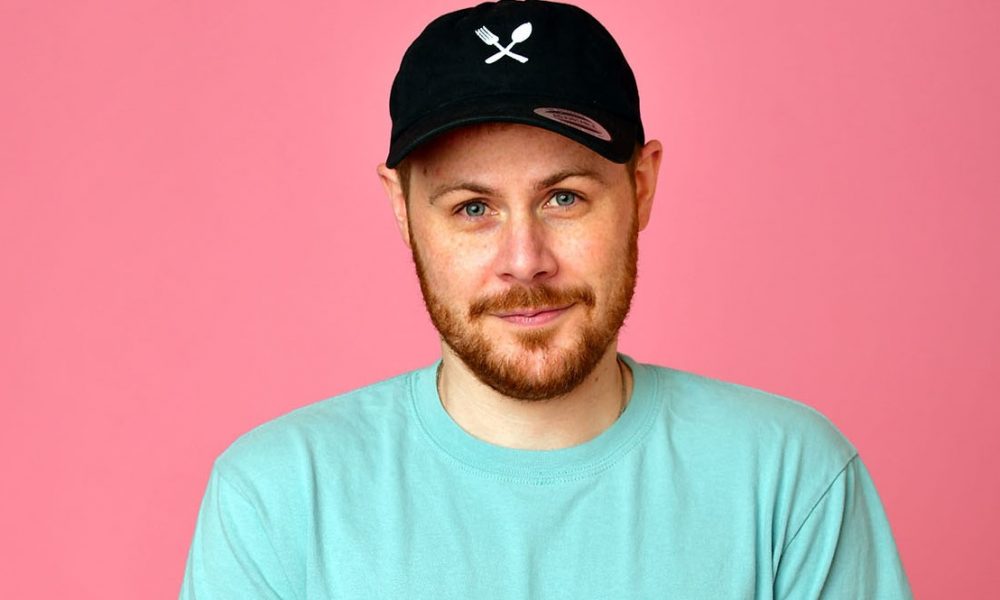

When it comes to the world of bass music, there seems to be an never ending supply of promising up-and-coming talent popping up while some of the true pioneers of the genre are still making their presence felt with Spag Heddy being one of the bunch.
With a career that has spanned over just about twelve years now, the Dutch talent continues to evolve as an artist while being able to adapt the ever-changing landscape of electronic dance music which is no easy task in this day and age.
This year saw the bass enthusiast take another the monumental step forward in his career with the release of his debut album The Noodle Effect which serves as a 17-track body of work that not only showcases his production prowess but is an ode to his true evolution as an artist over the last few years.
“With this album, I wanna showcase more of myself than just the headbanger dubstep that I’m known for nowadays. This album made a perfect home for some of my productions that are not dancefloor-aimed but that I absolutely love and have wanted for so long to see the light of day. While a few of these tracks have been years in the making, others are brand new and show what I’m currently vibing with. Thanks to this project, I rediscovered my love and motivation to make melodic and timeless music, whether it’s DJ-friendly and/or danceable or not. ‘The Noodle Effect’ couldn’t be a better title because it is on-brand, but it also means traveling into a singularity, which essentially is to become timeless,” Spag Heddy explains.
Still buzzing off the release of his debut album, we took the time to chat with the one and only Spag Heddy. Check out our exclusive interview below!
Spag Heddy – The Noodle Effect | Download |
TSS: You’ve been a part of this music-making scene for over a decade now – what are some changes you’ve noticed over the years?
Spag Heddy: The most obvious change is the blends of genres, both production wise as in live sets. It’s a lot more accepted and normalized now to play all kinds of edits and genres in a set, whether you are going to a dubstep show or to a house party. A lot of the bigger DJs even are playing around with genres other than the ones they’re known for. And this is a cool thing.
TSS: How has the bass music scene, specifically, changed since you first emerged onto the scene?
Spag Heddy: Well what I just explained is mainly about the bass music scene, since that’s the environment I’ve been in for the last decade. There is a difference between the European scene where I come from and the American though. I think the change is even more noticeable in the European scene. Nowadays in European bass shows the microphone is used a lot more by DJs themselves – this was 10 years ago very not done , if there was even a mic it was usually just used by either an MC , or the show promoter to announce a DJ or something – and DJs now play sets with tons of edits (pre-made transitions between tracks as a surprise effect) even with singalong (pop) songs. Back in the day that was definitely not a thing at bass music shows. People came specifically to shows to hear that certain genre. Now it’s all more fusion.
TSS: What is it that made you fall in love with bass music?
Spag Heddy: The power and energy that’s in the music. It’s exciting and generates adrenaline. Sub bass is such a mighty thing. When I heard dubstep for the first time I was immediately drawn by the wobbles, it fascinated me how basslines were kind of the vocals of a track and how catchy and diverse they could be, from super deep and grimy to energetic and aggressive.
TSS: How would you say your sound has evolved since the earliest stages of your career?
Spag Heddy: When I started I made a lot of melodic music, drumstep especially, that had simple catchy themes. This gained me a big online fanbase. After a few years of that I went into a more heavy dubstep direction, where the focus was more on basslines and loudness. That’s when my time with Never Say Die started. I’ve done a few solid releases with them until they unfortunately stopped. Nowadays I’ve found my love for producing melodic music again, which you can hear on my album. I honestly don’t think my sound or style has changed much over the years, I still make the fast-paced arrangements like how I made them in the beginning, and the flow/patterns in my songs are still very much the same I think. What evolved is the production quality, and maybe a bit more sophistication in my songs, especially the ones where I worked with vocalists. But I’m still pretty recognizable with my rather unpolished and raw sound. It’s something I can’t seem to shake off even I wanted to. (Which I sometimes do haha)
TSS: What would you say has been the key to success and longevity?
Spag Heddy: It’s a combination of things, consistently releasing (good) music, and being active on social media, being close with your fanbase. But I’ve also been lucky that I met the right people, like my manager and booking agent, who did and still do great work and really keep the drive going in my career. For me it’s a necessity that I have other people take care of the business side of things, so I can focus entirely on making music and playing shows. This is definitely recommendable for many other artists and creative people.
TSS: When it comes to production, where do you find inspiration?
Spag Heddy: From the shows, watching crowds during my sets and during other DJs. Also from listening to other producers who I am fan of.
TSS: Speaking of producing, what gear and programs do you use?
Spag Heddy: I work in FL Studio 21. I do own Ableton Live as well but use that mostly for just sound design. I don’t have much physical gear other than my MacBook, and a pc with a midi keyboard and some studio monitors. But I produce on DT-770 headphones most of the time.
TSS: When you have a rough week or hit a wall creatively, how do you get back on track?
Spag Heddy: Honestly usually just by taking a break, doing other things. But what gets me motivated again often is going through old projects. In my first years I produced a lot of music and started many unfinished projects, and those still help me get excited again. With every inspiration rush new projects get started that then later I can work on whenever I’m stuck with another project.
TSS: Tell us about your recent single “Never Thought” with Micah Martin and how it came together.
Spag Heddy: I had started the project a few years back already, and it needed a vocal but I couldn’t find the right one. I had worked with Micah on Dream & Disaster, and he sent me bunch of toplines after that. There was one that stood out to me and it just fit so well on my instrumental that it felt like it was made for it. I did have to restructure the vocals a bit and chose a different part of it as the ‘hook’. Micah liked it so much he re-recorded it all for me and after that the track was just perfect.
TSS: You’ve released plenty of tracks over the years, but The Noodle Effect is your debut album. What was the process like putting a 17-track album together?
Spag Heddy: So the album is a combination of tracks I already had laying, with some that are brand new. Something I wanted to do for a long time was working more with vocalists, and make more melodic music again. That’s also kind of where my desire to make an album started. Tracks not aimed at the dance floor were not really my “style”, so with this album I wanted to showcase that side of me.
TSS: What would you say is your favorite track of the album and why?
Spag Heddy: That is very tough to say haha, that’s like asking for the favorite child. The track I’ve probably listened the most to myself is Voices. Originally it had a different vocalist on it which didn’t work out, but then Luma made it even better with her voice. But honestly every track on my album has a special place with me. Moods also change and with every mood there’s different fitting songs.
TSS: With The Noodle Effect out now, is there anything else Spag Heddy has planned for 2023?
Spag Heddy: Yes, but that’s still a surprise. We’ll have news very soon.
“Follow” Spag Heddy : | Facebook | Twitter | Soundcloud |












RSS